Read time ⏲
” Rent in Tokyo not expensive meh? The room is very small, right? “
” Food in Malaysia is so cheap~! ”
— things my friends in Japan and Malaysia often say.
So… is Japan really that expensive, and is Malaysia really that cheap?
In this article, I will breakdown my personal cost of living in Japan (Tokyo) and Malaysia (Kuala Lumpur, a.k.a KL) when I was working.
Table of Contents
Cost of Living Breakdown
Before We Start
A quick disclaimer. I am a big saver and an investor, so my spending is intentionally on the lower side.
This breakdown is meant to be a reference, not a representation of the average lifestyle.
- Currency is kept as JPY for Japan and RM for Malaysia
- All figures are monthly averages
1. Rent
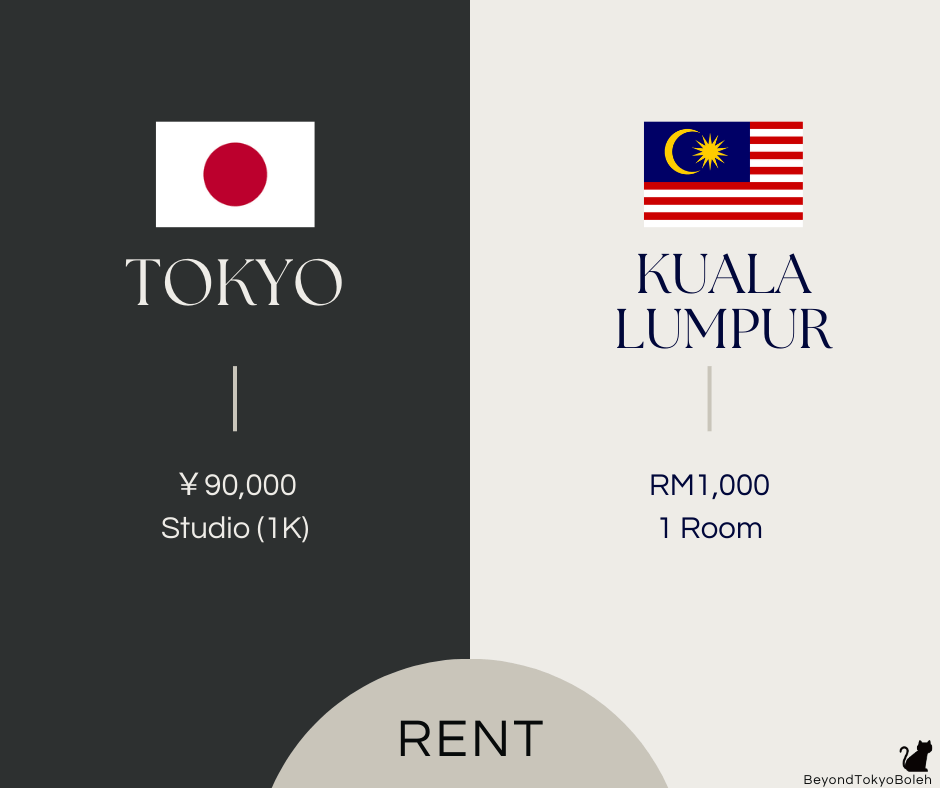
Rent is a fixed cost and usually takes up the largest portion of monthly expenses.
Tokyo
To keep cost down, I rented a place slightly outside the city center, around 30 minutes by train from my office.
- In Japan, I rented an entire apartment to myself. Due to inflation, rentals might have gone up at least 2%.
KL
According to PropertyGuru, the average rent for room rental in Malaysia ranges from RM500 to RM1,500. As I am living with my parents, I do not pay rent. However, I contribute around RM1,000 per month toward their medical bills. For a fair comparison, I’ll treat this amount as my “rent” in Malaysia.
2. Utilities
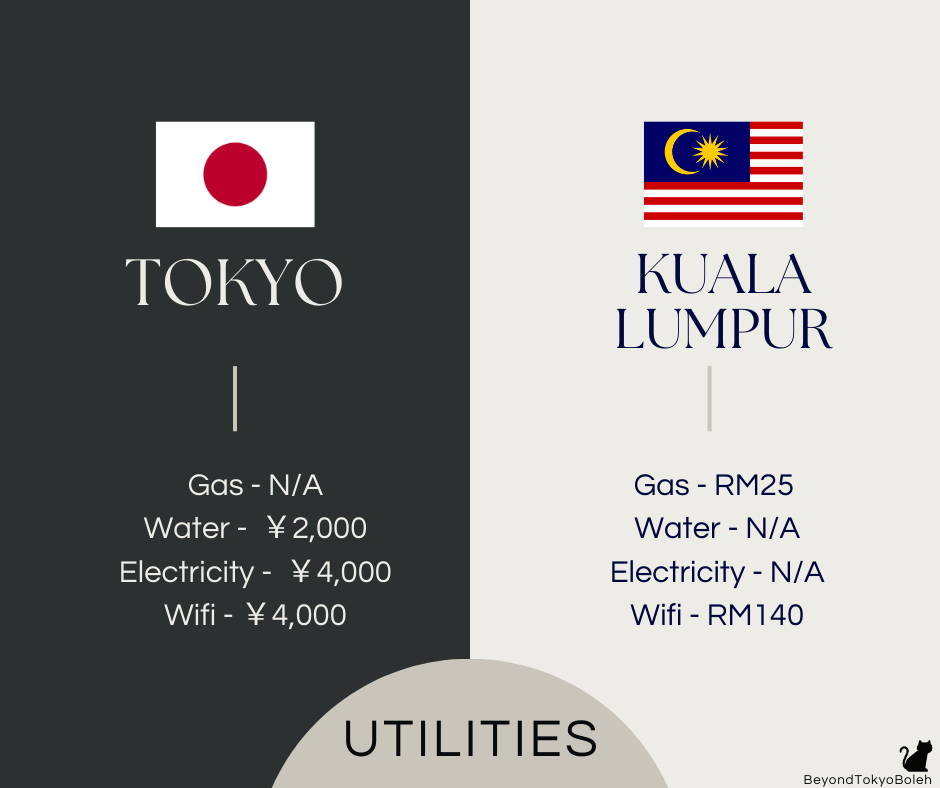
In Japan and Malaysia:
- Electricity is the most costly
- Water is the cheapest
Since I am living with my parents in Malaysia, my water and electricity expenses are N/A. I only pay for Wi-Fi and Gas (Total RM165 per month). RM50~RM150 is what you would pay if you were renting a room and sharing utilities.
Gas
Japan: Gas is commonly used for hot water and cooking, but I lived in an all-electric apartment, so my gas cost was ¥0. In general, gas costs around 2,000-4,000 yen per month on average.
Malaysia: My household uses cooking gas, which costs around RM25 per month.
Water
Water is government-managed in both countries and very affordable.
- Malaysia: Around RM15 per month for the household (paid by my parents)
Electricity
Japan: Electricity is supplied by regional private companies (e.g. TEPCO in Tokyo). Costs are higher in summer and winter due to air-conditioning and heating.
- My average monthly electricity bill was around ¥7,000, though this can be higher for larger apartments.
Malaysia: Electricity costs vary widely depending on air-con usage, but are generally lower than Japan. My parents are covering this, thus I will leave it as RM0, however, on average, it costs around RM150 for a 2-3 bedroom apartments.
Wi-fi
Internet setup is similar in both countries — you choose a provider, and they handle installation.
Japan: You can refer to this website for prices comparison. (only in Japanese) Please note that some apartments provide free Wi-fi, and you can avoid the hassle in looking for a internet provider.
Malaysia: I currently pay for the household Wi-Fi.
3. Food
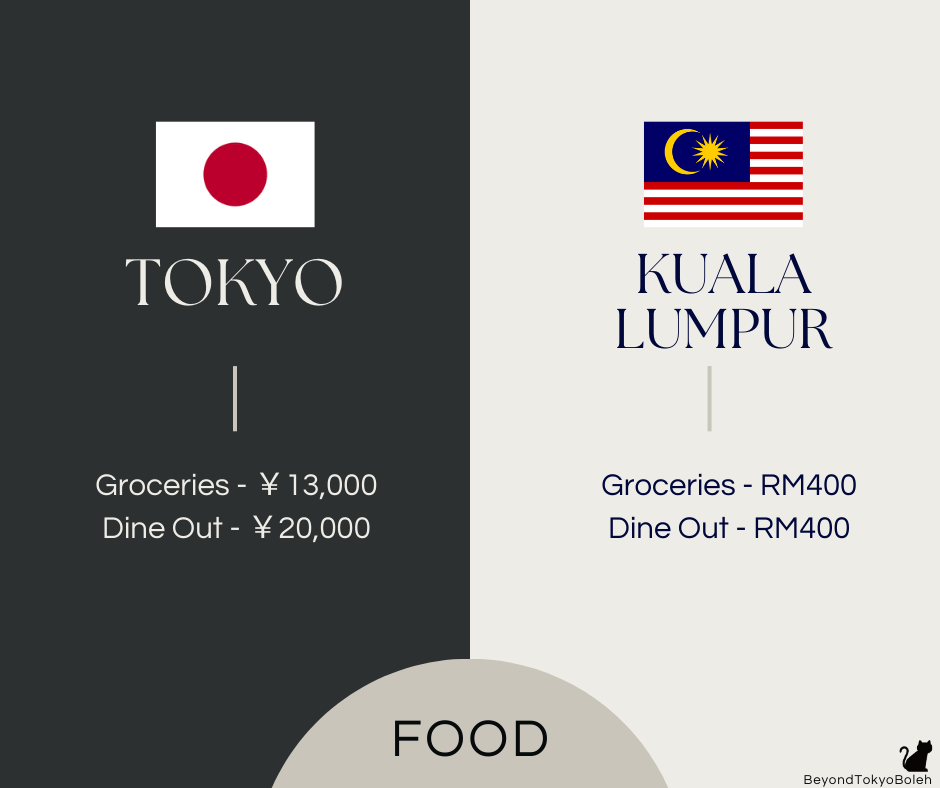
I love cooking and most of the time, I pack my food to work in both Japan and Malaysia. This not only keeps my food spending under control, but also allows me to eat healthier.
That said, I don’t completely avoid eating out — food is still a big part of social life.
Tokyo
On workdays, lunch in Tokyo costs around 1,200 yen if you eat out. While I prefer bringing my own lunch, I usually schedule at least one lunch per week with colleagues or friends to catch up.
During off days, I sometimes dine out with friends, or visit a bar or cafe. A casual outing like this usually costs around 2,000 yen –5,000 yen in total, depending on the place.
*Fun fact: Grocery prices in Japan are surprisingly consistent — whether you’re in Tokyo or the countryside, prices are largely the same.
KL
Since I am living with my parents, we share the grocery bill, and we usually eat at home. I bring my food to work almost everyday and usually dine out with colleagues about once a week.
There isn’t much casual “after-work” entertainment in Malaysia compared to Tokyo, so when meeting friends or family, it’s usually centered around meals. This explains why my spending on groceries and dining out is relatively balanced.
4. Entertainment/ Leisure
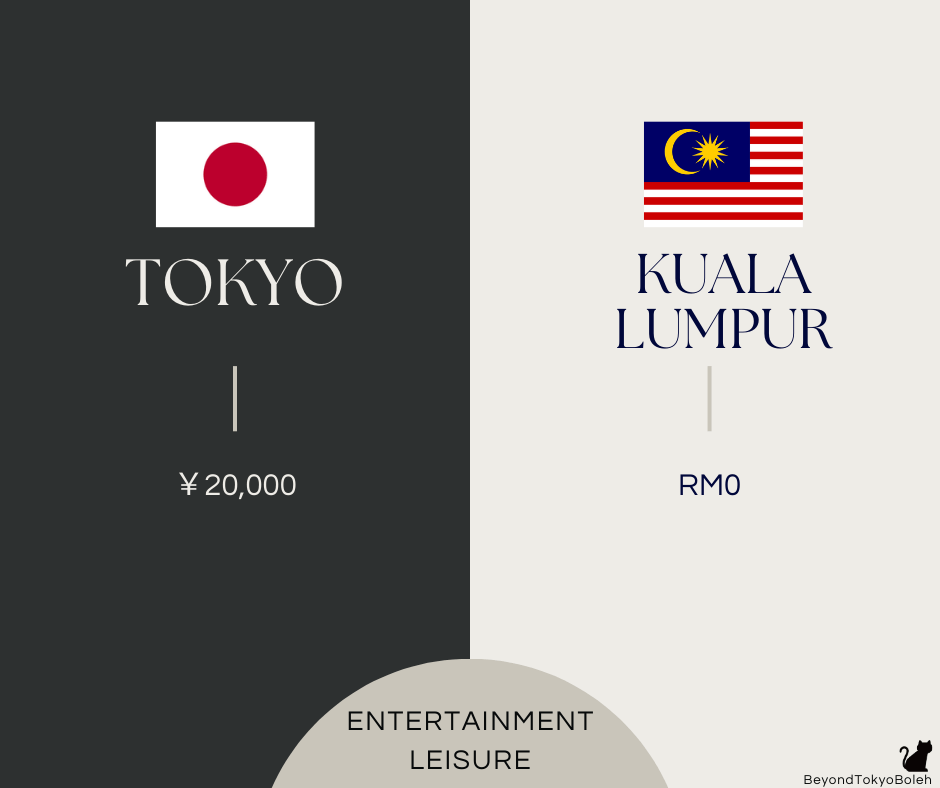
Entertainment and leisure include traveling, movies, museums, exhibitions, and other non-essential activities.
Tokyo
I love traveling and hiking, so when I was living in Japan, I made it a point to take small trips 1–2 times a year to explore different parts of the country.
On average, it costs around 20,000 yen per month.
KL
Since returning to Malaysia, I have been helping with my parents’ medical expenses, so I try to keep my wants, such as entertainment as low as possible.
Fortunately, there are many ways to enjoy life in KL without spending much. Jogging, hiking, and exploring nearby parks are easy and accessible. As mentioned earlier, dining out is my main form of entertainment and social time, rather than an additional expense.
5. Daily Necessities
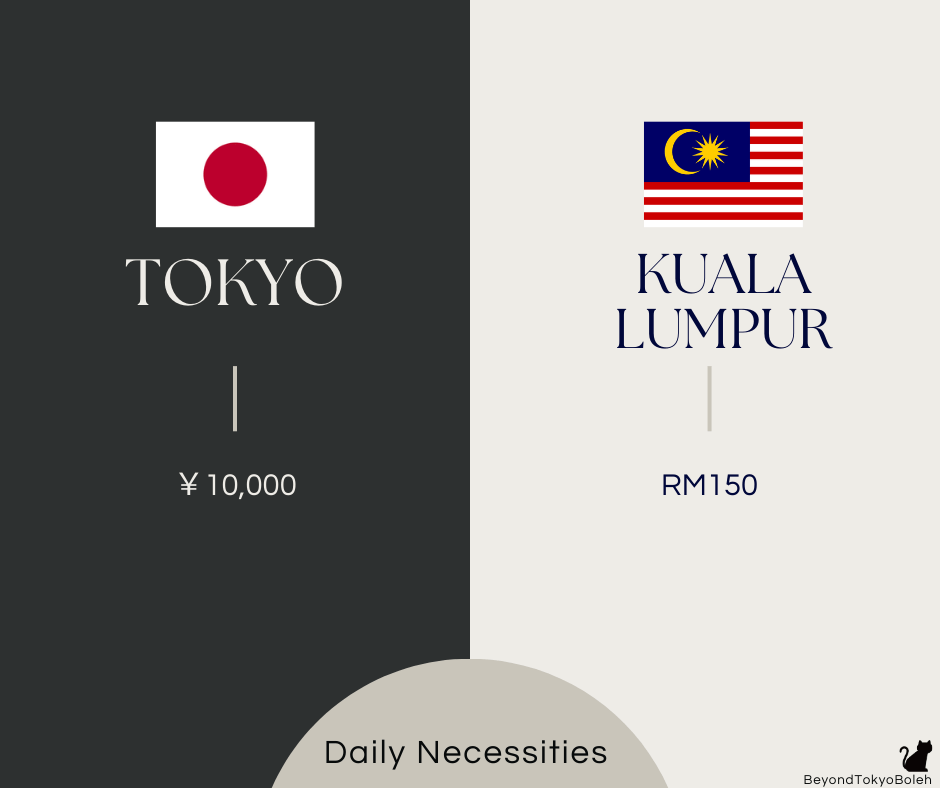
Daily Necessities include toiletries, detergent, and other household essentials.
6. Transportation
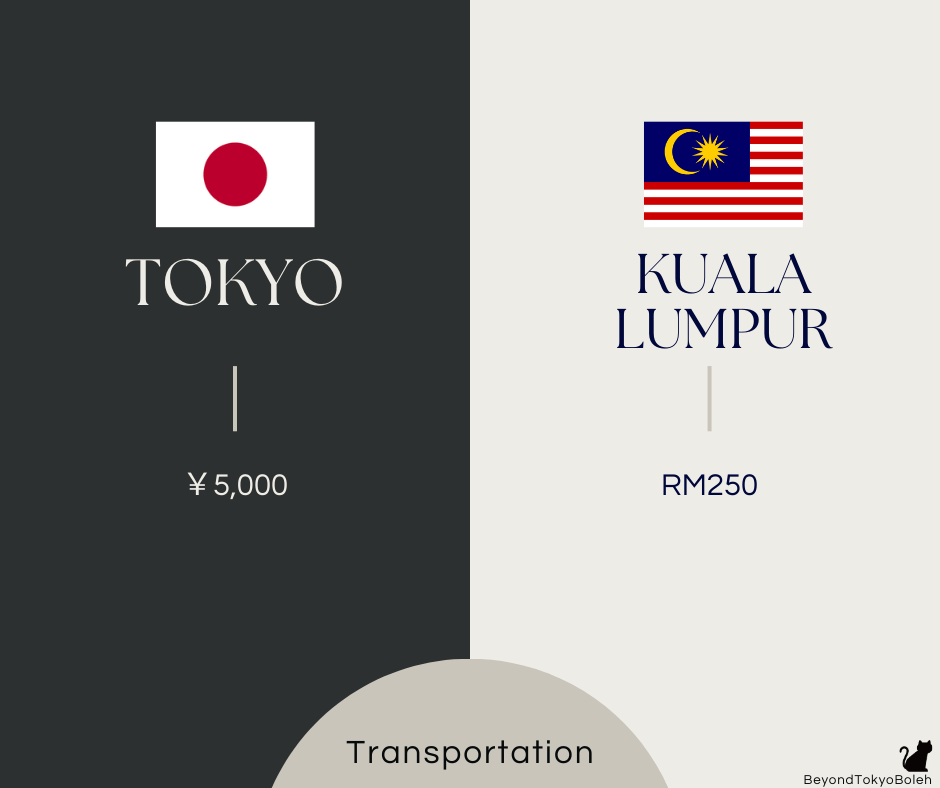
Tokyo
In Tokyo, I do not own nor need a car, I can get around entirely by public transport.
My company covers my train season pass between home and office, so I only pay for the train rides when I travel on other lines or go somewhere unrelated to work.
Basically, public transport in Tokyo is extremely convenient and I can essentially get anywhere by train, which keeps transportation costs low and predictable.
KL
My parents are kind enough to lend me their car, so I do not have any car loans.
The RM250 average monthly expense includes:
Petrol, maintenance & repairs, car wash, driving license, road tax and car insurance.
7. Phone Bills
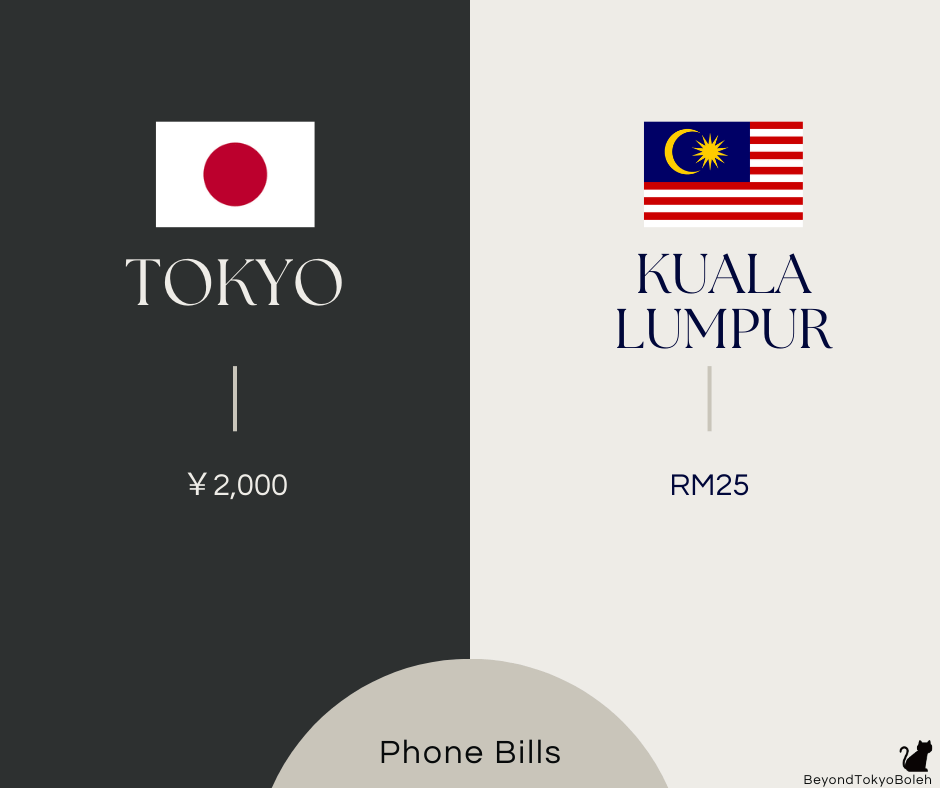
Tokyo
I used post paid package, provided by Line Mobile.
Includes 5GB of data, calls are charged per minute, however, I rarely make phone calls.
Verdict:
In a glance
If we convert Japanese yen to Malaysian ringgit, the cost of living in Japan is undeniably higher.
However, since I was earning and spending in the local currency in both countries, I think comparing the living expenses as a percentage of income is far more meaningful.
Across both Japan and Malaysia, I was able to save approximately 40~45% of my salary.
Some may argue that :
- My salary was higher than the average, which made saving easier, or
- Salaries in Malaysia are too low, impossible for me to get rich/ save more money.
In my case, my salary dropped by at least 50% when I moved from Japan back to Malaysia. Despite that, by adjusting my lifestyle and expenses, I managed to maintain a 40~45% savings rate.
In conclusion, no matter where you live — or how high or low your income is — with the right strategy and willpower, any saving rate is possible in any country.
*Others includes adhoc expenses such as, medical bills, insurance, initial rental payments, etc
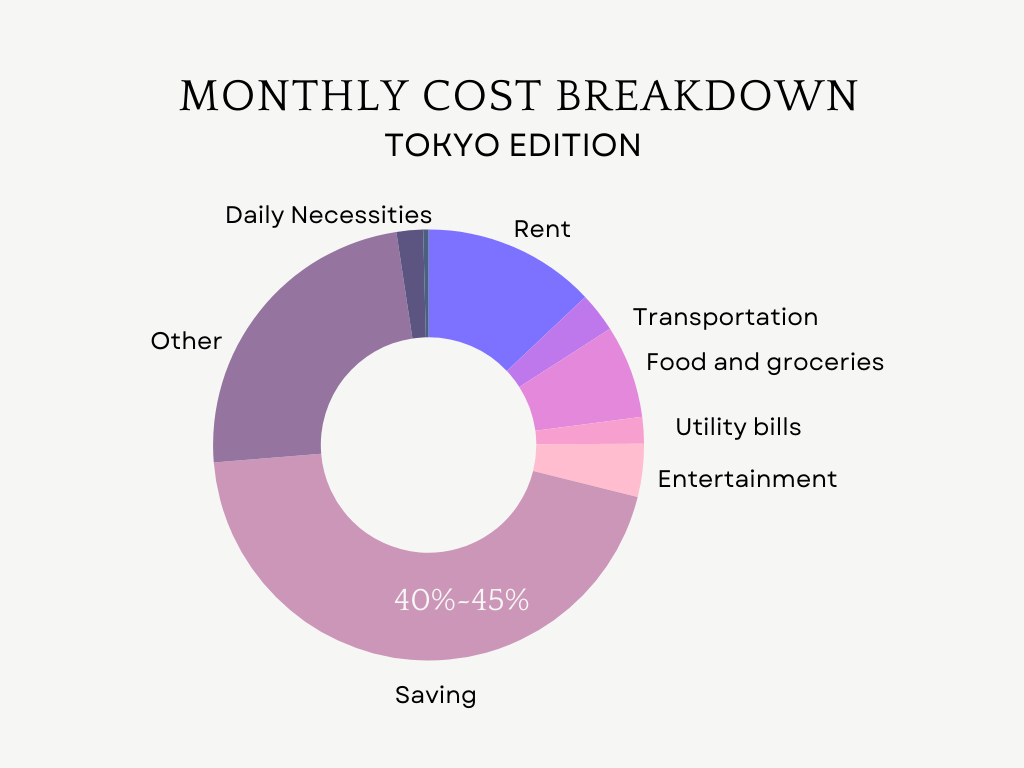
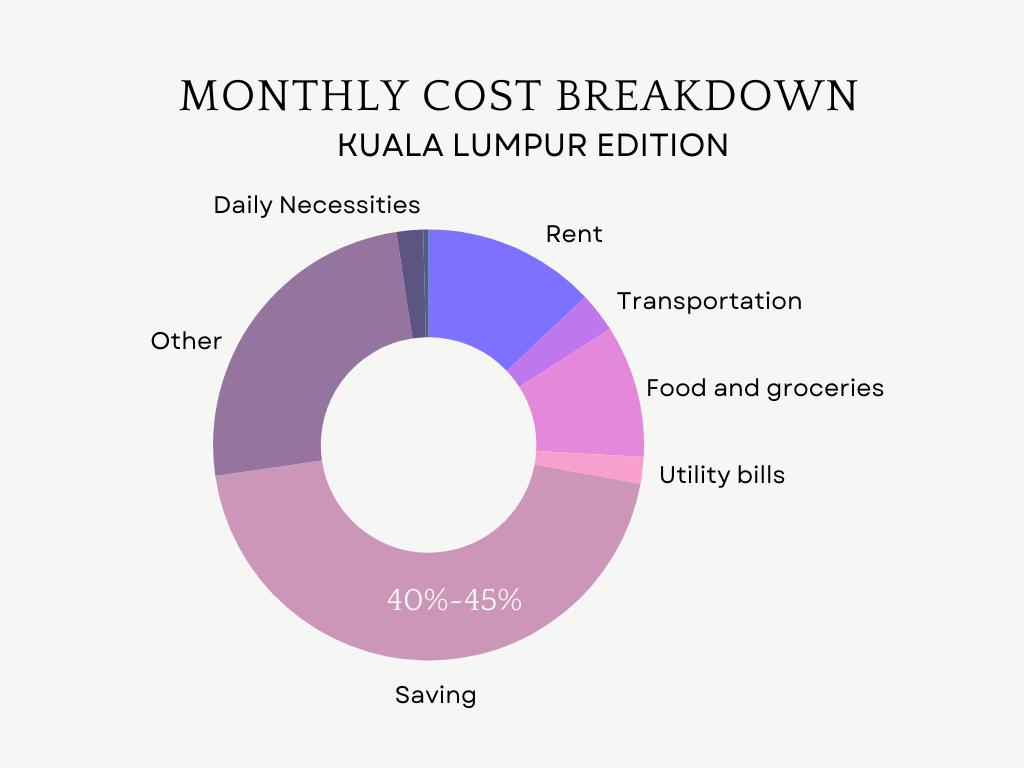
Others includes adhoc expenses such as, medical bills, insurance, initial rental payment, tax, etc
Do not save what is left after spending, but spend what is left after saving
-Warren Buffett
 BeyondTokyoBoleh
Leave a comment