
Read Time
After investing in the stock market and reading countless books, I’ve come to appreciate several advantages of real estate that equities simply don’t offer.
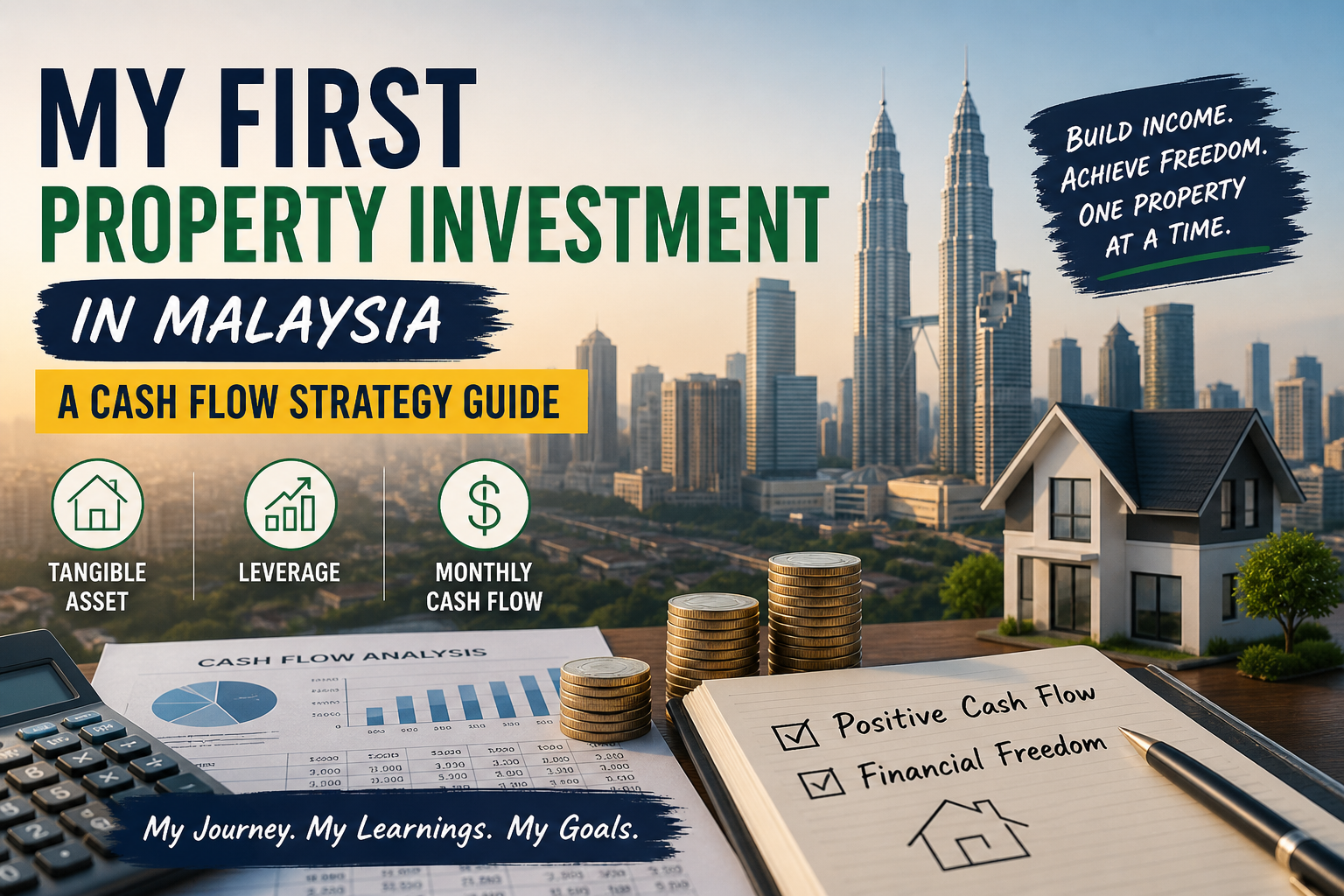
Real Estates are: tangible, allows the use of leverage, bring in monthly cash flow.
In Japan, the rental market is definitely more attractive, given that most people rent rather than owning a place. However, for my first property investment, I decided it would be safer to start in Malaysia—my home country—where I’m more familiar with the system and can avoid unnecessary complexity.
While researching the Malaysian property market on Google and YouTube, I noticed a lack of high-quality, practical information compared to markets like Japan or the U.S. That realization led me to take things a step further—I obtained my REN (Real Estate Negotiator) license and joined a Japanese real estate agency as a part-time agent.
Getting the REN license was super easy. It only required attending a 2-day course followed by an open-book exam (designed to be passable), and then registering with an agency.
It has now been about six months since I joined, and I’ve learned a great deal about the industry—how to read a SPA (Sale and Purchase Agreement), identify popular areas, understand expats’ needs when moving to Kuala Lumpur, and more.
My Investment Goal
My ultimate goal in property investment is not capital gain, but CASH FLOW! Any capital gain is simply the icing on the cake.
In this blog, I’ll share my real estate investment journey in Malaysia, along with practical insights I’ve gained from working as a part-time agent.
My Process:
1. Identify the Right Property:
10 criteria for Selecting an Investment Property
| Criteria | Details |
|---|---|
| Well known developer | Must be a reputable developer known for its superb building quality |
| Scarcity | Unique features that differentiate the property and reduce vacancy risk |
| Mutiple tenant target | For example: Young professional working in KL/ expats, Families |
| Price | Is it below median price in that area? |
| Accessibility | Walkable distance to public transportation? Accessibility to highways? |
| Layout | Practical layout that appeals to a broad tenant base, with a view that justifies the price |
| Cash Flow | Positive from the first year onwards |
| Catalyst for potential Capital gain | Upcoming developments such as malls, MRT/LRT stations, or infrastructure projects |
| Nearby Amenities | Close to shopping malls, business districts, or schools (especially important for families) |
| Rental Yield | Above average for that area |
2. Run simulation
I created a spreadsheet to calculate projected cash flow and ROI before making any decisions. This helps ensure that the property aligns with my cash flow objective and avoids emotional decision-making.

3. Contacting the Agent
Once I have identified a property I am interested in, I will reach out to the property agent to ask for more info.
In Malaysia, it’s quite common for agents to post fake listings to attract leads and then redirect buyers to other properties. I’ll cover how to spot these in a future article.
Questions that I will ask before viewing the property:
1. Is this property still available? < If the agent says it’s already sold, it’s often a sign of a fake listing.
2. Is it tenanted? What is the tenant profile? What is the current rent? > In Malaysia, landlord has the right to kick out the current tenant, but wont look good for both buyer and seller
3. Is the price negotiable?
4. How much is the monthly management fee?
Final Thoughts
Starting my property investment journey has been both exciting and eye-opening.
There are moments when I feel a bit deflated after discovering that a property isn’t as good as it initially seemed. Listings can look attractive, and agents can be very convincing. That’s why having a solid simulation framework has been invaluable—it keeps me grounded and prevents me from being swayed by beautiful ads or persuasive sales talk.
This is just the beginning of my journey. In upcoming posts, I’ll be sharing:
- How to spot fake property listings in Malaysia
- A breakdown of my cash flow spreadsheet
- Case studies of actual properties I’ve analyzed
- Common mistakes to avoid as a first-time investor
Stay tuned!!
Leave a Reply